
Share this
by Smile Source + PerioSciences on Jun 29, 2026, 9:47:03 AM
Dry mouth, or xerostomia, is often dismissed as a minor inconvenience. In reality, it affects up to 30% of patients and can significantly impact oral health and overall quality of life.
As more patients take medications such as antidepressants, antihistamines, antihypertensives, and certain pain relievers, xerostomia has become an increasingly common concern in dental practices. Recognizing and managing this condition is an important part of comprehensive patient care.
Why Saliva Matters
Saliva is essential for maintaining a healthy oral environment. It works continuously to:
- Buffer harmful acids
- Support enamel remineralization
- Cleanse oral tissues
- Maintain a balanced oral microbiome
- Lubricate and protect soft tissues for comfort
When salivary flow is reduced, patients become more susceptible to:
- Dental caries
- Demineralization
- Halitosis
- Oral candidiasis
- Periodontal inflammation
- Difficulty eating, speaking, and swallowing
- Reduced comfort while wearing dentures or other oral appliances
Recognizing the Signs of Xerostomia
Because patients don't always report dry mouth symptoms, dental professionals should proactively screen for signs of dry mouth during routine examinations.
Common indicators include:
- Dry, sticky, or burning oral tissues
- Altered taste sensation
- Cracked lips
- Mouth sores
- Oral candidiasis
- Persistent halitosis
- Poor denture retention
- Unexplained increases in caries
- Gingival irritation or inflammation
Early identification allows clinicians to intervene before more serious complications develop.
Managing Dry Mouth Beyond Temporary Relief
Traditional xerostomia management often includes:
- More frequent recall visits
- Professional fluoride therapy
- Hydration counseling
- Saliva substitutes and symptom-relief products
Many over-the-counter dry mouth products rely primarily on glycerin to provide temporary moisture.
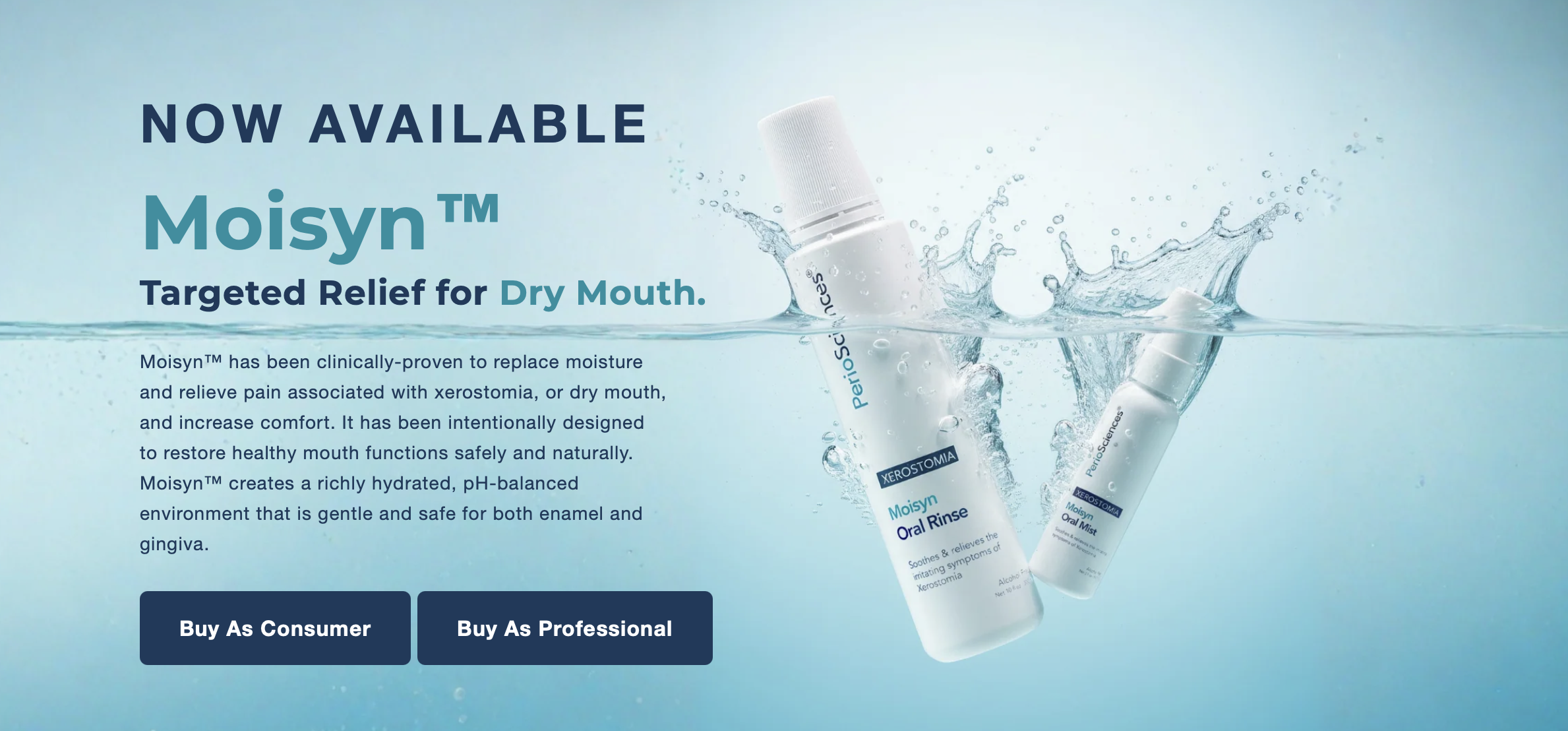
Moisyn™ with ChitoTek™ technology offers a different approach. By combining glycerin with a proprietary blend of chitosan and arginine, the formula is designed to adhere to oral tissues, attract and retain moisture, soothe irritation, and help support a balanced oral environment. Clinical data support symptom relief lasting up to six hours.
For additional information about xerostomia, its causes, and evidence-based management, visit the American Dental Association's Oral Health Topics resource on xerostomia.
Dry mouth is about far more than patient comfort—it can significantly influence oral health outcomes, treatment success, and quality of life.
Join PerioScience for an upcoming live webinar to explore the science behind xerostomia, learn practical strategies for identifying at-risk patients, and discover innovative approaches to managing dry mouth in everyday clinical practice.